
Every time I find myself spending an hour analyzing the specific stitch density of a secondhand rugby shirt collar, or arguing with myself about whether a pair of dark-wash jeans is too structured for a rainy Tuesday morning, I hear my favorite mental shield kick in: It’s not that deep. It’s just clothes. It’s just fabric and thread and nostalgia packaged into a daily routine.
But then I sit in my graduate visual culture seminar, look around at thirty other twenty-somethings wrapped in oversized cable-knits and slouchy blazers, and I realize: But also kind of.
Fashion is never just a random aesthetic choice that happens to go viral on TikTok because a couple of brands decided it was time to sell cotton shirts again. It is an emotional barometer. And right now, in 2026, the meteoric rise of Preppy Revival 3.0 is a direct response to a world that feels increasingly loud, fluid, and fragile. We aren't just getting dressed for the weather anymore; we are building a psychological safety net out of our clothes.
The Historical Cycle of Collegiate Comfort
If you look back at modern fashion history, collegiate styling experiences a massive, undeniable wave of popularity every single time the cultural or economic landscape undergoes a period of heightened social anxiety. An analysis in The Boston Globe perfectly highlighted this exact psychological mechanism: when the future feels profoundly uncertain, human nature drives us to seek out stability, tradition, and a sense of permanence.
We crave an anchor, and the structural language of "the academy" has historically provided that anchor.
Social / Economic Anxiety Rises
       │
       ▼
Search for Stability & Tradition
       │
       ▼
Resurgence of Collegiate Design Codes (Preppy Style)
       │
       ▼
Emotional Architecture: Clothes as a Grounding Mechanism
In the mid-20th century, the original Preppy 1.0 uniform offered a rigid, reliable sense of social hierarchy and institutional belonging during post-war restructuring. In the late 2000s and early 2010s, Preppy 2.0 returned as a commercialized, glossy pop-culture escape right after a massive global economic crisis.
And here we are in 2026. We are navigating an era of hyper-acceleration, where the digital space moves so fast it causes literal whiplash, and fast-fashion micro-trends burn out in the span of two weeks. In response, our generation has reached for the heaviest, most durable, and most historically rooted pieces we can find. We don't want the slick, metallic, or futuristic. We want clothes that feel like they have lived through something.

Building "Emotional Architecture"
When I talk about Preppy 3.0 as a form of "emotional architecture," I mean that we are using the physical properties of these garments to create a sense of personal order. There is a grounded reality to traditional American sportswear and tailoring staples.
Consider the physical reality of a classic heavy-cotton rugby shirt or an unstructured herringbone wool blazer. They possess a literal, tactile weight. When you pull an oversized knit over your shoulders, it acts as a protective shield. It has body. It creates a defined silhouette that doesn't collapse, no matter how chaotic your day gets.
The beauty of Preppy 3.0, however, is that it completely rejects the elite, exclusionary nonsense that used to define the style. The original Ivy League dress codes were designed to signal who belonged inside the gates and who was left out. Preppy 2.0 was about performing a fantasy of wealth and country-club leisure.
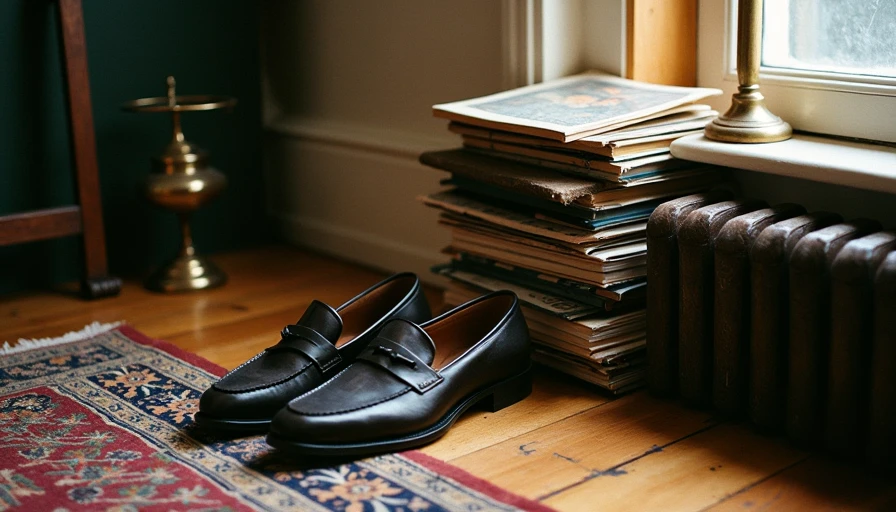
But this generation is entirely uninterested in teaching people "how to look rich." We don't want the status; we want the substance. We take the old uniform, strip away the country-club pretense, loosen the seams, and turn it into a soft uniform that belongs to anyone who values style with a memory.
The Old Prep: Buttoned up, ironed, exclusive, rigid, status-driven.
The New Prep (3.0): Oversized, un-ironed, inclusive, fluid, comfort-driven.
Why the "Slouch" Matters
The deliberate decision to wear these classic pieces oversized—to let the shoulders drop, to layer blazers over sports jerseys, and to leave shirts untucked—is the exact mechanism that saves Preppy 3.0 from becoming an elite costume. The slouch is an act of subversion. It says: I appreciate the history of this garment, but I am entirely in control of how it fits my life, not the other way around.
When I look at my cat, Coco, curled up on my worn-in tweed jacket at the end of a long day of classes, I’m reminded that the best clothes are the ones that can handle reality. They shouldn't require high-maintenance dry cleaning or a perfect posture to look good. They should look better when they are a little rumpled, a little lived-in, and thoroughly broken in.
So, is starting an entire blog dedicated to modern preppy style an exercise in overthinking an outfit? It’s not that deep. But when you realize that getting dressed is how we quietly signal our need for comfort and continuity in a wild world—also kind of. Let’s keep building our uniforms, one soft layer at a time.



Letters
No letters yet — be the first to write.