
If you scroll through the mood boards that define classic East Coast style—the ones filled with faded photographs of 1960s Yale students, vintage Harvard rowing team jackets, and perfectly manicured lawns in Connecticut—you notice a very specific theme. The images are beautiful, but they are completely static. They feel like museum exhibits from an era designed to keep people out. The message hidden beneath those starched collars was always about exclusion. It was a visual language created to show who belonged inside the gates and who was left standing on the sidewalk.
As a fashion marketing graduate student, my job is to analyze how visual languages mutate over time. And to be completely honest, the traditional American Ivy archive didn't help me decode our current 2026 style landscape at all.
Instead, I found the real blueprint for Preppy Revival 3.0 halfway across the world, on the stages and music videos of Seoul. K-Pop styling did something to the collegiate uniform that Western heritage brands have been too stubborn to try: it completely stripped away the old-money country-club pretension, loosened the rigid gender barriers, and turned academic clothes into a playground of subversion and comfort. It’s not that deep. But also kind of.
The Seoul Subversion: From Elite Uniform to Pop Subculture
To understand why K-Pop styling is so critical to the modern preppy aesthetic, we have to look at how the South Korean entertainment industry approaches fashion. In my visual communication seminars, we talk about "semiotic decoupling"—taking a symbol that carries a heavy historical meaning and entirely separating it from its original context.
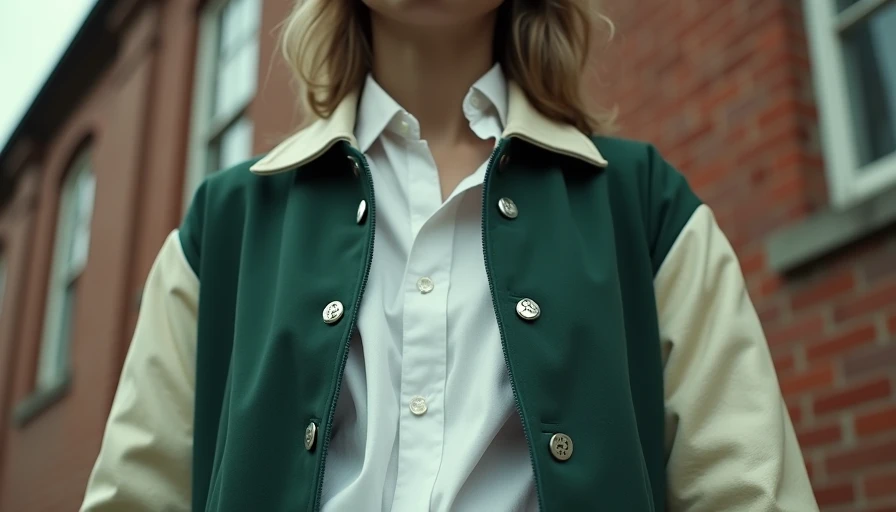
When a classic American fashion house designs a preppy collection, they are always looking backward, trying to preserve a fantasy of mid-century wealth. But when a K-Pop creative director builds a concept around the "school uniform" or "varsity" aesthetic, they don't care about the history of the New England ruling class. They treat a pleated skirt, a rugby shirt, or a tailored blazer simply as graphic shapes, textures, and cultural textures to be remixed.
This cultural displacement completely changes the energy of the clothes. It shifts the style from an elite uniform of compliance into a fluid language of creative self-expression.
Classic Ivy League Prep (Static) ───> Rigid Social Status & Exclusion
                                              │
                                              ▼ (Seoul Style Subversion)
Preppy Revival 3.0 (Dynamic) ───────> Fluid Subculture, Slouch & Self-Expression
K-Pop styling systematically broke down the traditional collegiate matrix through three distinct design choices:
Extreme Proportional Distortions: Traditional prep demands a neat, balanced fit. K-Pop styling inverted this by combining massively oversized, dropped-shoulder sweaters with ultra-cropped base layers or fluid, wide-leg tailored trousers that pool on the ground.
The Erasure of Stiff Gender Coding: The music industry completely democratized academic tailoring. Male idols routinely perform in soft cream cardigans, pearl necklaces, and cropped blazers, while female idols wear oversized men's oxford shirts, heavy rugby shirts, and chunky loafers with thick athletic socks. It removed the masculine corporate stiffness from the aesthetic.
The Introduction of High-Low Friction: K-Pop styling proved that a tailored blazer looks better when paired with an athletic jersey, nylon gym shorts, or a casual vintage baseball cap. It made the entire look accessible, youthful, and functional for real life on city streets.
Old Ivy vs. The New K-Pop Blueprint
To make this transition actionable for a daily wardrobe, let's break down the exact visual differences between the dusty country-club manual and the modern, Seoul-inspired soft uniform.
Wardrobe Component | Old Ivy Manual (Traditional Prep) | K-Pop Blueprint (Preppy 3.0) | The Styling Result |
The Outer Layer | Tightly fitted navy blazer with stiff gold metal buttons. | Oversized, deconstructed herringbone or butter-cream blazer. | Drops the corporate stiffness; drapes like a soft jacket instead of a suit. |
The Base Layer | Perfectly starched, ironed oxford shirt tucked into chinos. | Washed cotton rugby shirt left unbuttoned, or a sports jersey. | Introduces an athletic, casual energy that cuts the elite pretense. |
The Accessories | Silk ties, leather belts, and pristine designer bags. | Thick ribbed slouched socks, simple pearls, and canvas totes. | Adds tactile, lived-in depth that feels collected rather than performed. |
Bringing the Friction Back to Brooklyn
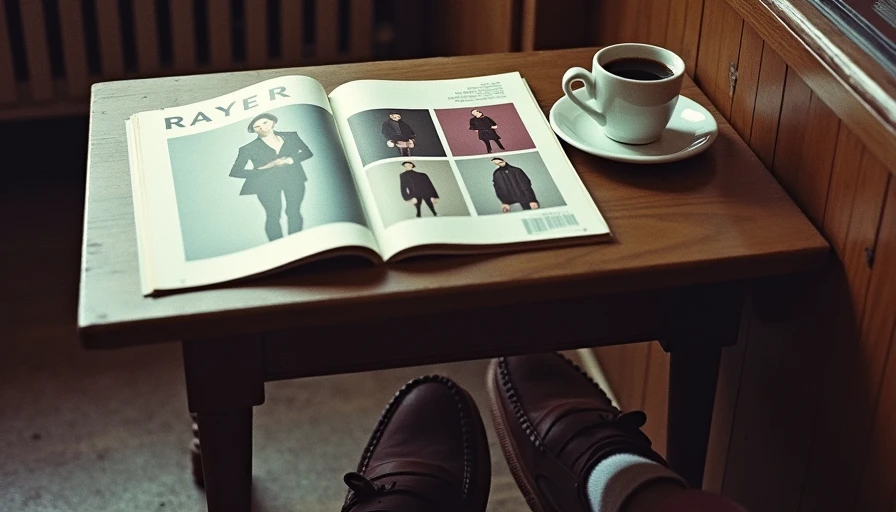
Last Wednesday, I was working on a final presentation for my digital marketing seminar, and I found myself staring at a concept photo of my favorite music group. They were all wearing oversized gray blazers, white shirts with loose collars, and scuffed leather shoes. There wasn't a single country-club logo in sight, yet the look felt completely scholarly, creative, and comfortable.
I decided to adapt that exact styling philosophy for my long day of campus meetings. I pulled an oversized, washed-navy polo shirt out of my closet, left the collar completely unbuttoned, and layered it under a loose gray herringbone wool blazer that I bought in a thrift shop men's section last month. I added high-waisted, straight-leg dark-wash denim and stepped into my favorite espresso-brown leather penny loafers with thick, slouched white cotton crew socks.
As I was packing my laptop, Coco ran past and did a dramatic leap off my bed, leaving a small dusting of grey cat fur along the ribbing of my right white sock. Perfection is completely uninteresting. I didn't even bother to brush it off.
When I walked into the visual communication lab, my advisor looked at my outfit and said, "Ella, you look like you’re ready to direct a music video or defend a thesis." tasting my iced oat latte, I smiled and replied, "Why not both?" That is the magic of Preppy 3.0. We aren't dressing up to pretend we belong to an outdated, exclusive East Coast institution. We are borrowing the best pieces of academic history, shaking out the stiffness with a modern global perspective, and creating a uniform that actually let us live, breathe, and create. Stop looking at old country club archives. Let your layers slouch, let your colors blend, and write your own rules.



Letters
No letters yet — be the first to write.