
If you were to peek into my entryway right now, past the stray cat toys and the stack of Amazon boxes I keep meaning to recycle, you would see a very specific footwear bias. There are a few pairs of dependable canvas sneakers, some heavy winter boots, and then, a small army of loafers. Suede loafers, pebbled leather loafers, black box-calf loafers, and my absolute favorite: a pair of dark espresso-brown penny loafers with a beautifully dull, scuffed patina.
In the lexicon of academic dressing, the loafer is non-negotiable. It is the structural anchor upon which the entire aesthetic is built. If you search for any collegiate fashion inspiration online, the loafer is always there, holding the outfit together like a strong thesis statement.
But here is the catch, and what I like to call The Loafer Question: because the shoe carries so much historical weight, it is incredibly easy to misuse. Style them one way, and they completely ground a relaxed, modern look, making it feel intelligent and effortless. Style them another way, and they make the outfit feel entirely too obvious—like you’re performing a caricature of an old-money boarding school student who spent the morning playing squash. As someone finishing up a graduate degree in fashion marketing, I’m obsessed with the fine line between wearing an outfit and letting the outfit wear you. Let's decode how to keep it real. It’s not that deep. But also kind of.
Decoding the Anatomy: Costume vs. Uniform
The primary reason people fail the loafer test is that they buy the wrong architecture. Most mass-market contemporary brands produce loafers that are too sleek, too shiny, and too rigid. When a loafer looks like it belongs in a corporate boardroom or a formal wedding, it cannot successfully transition into the slouchy, comfortable world of Preppy 3.0.
To understand how to choose a shoe that feels lived-in rather than performed, let's look at the anatomical differences that change the entire narrative of an outfit:
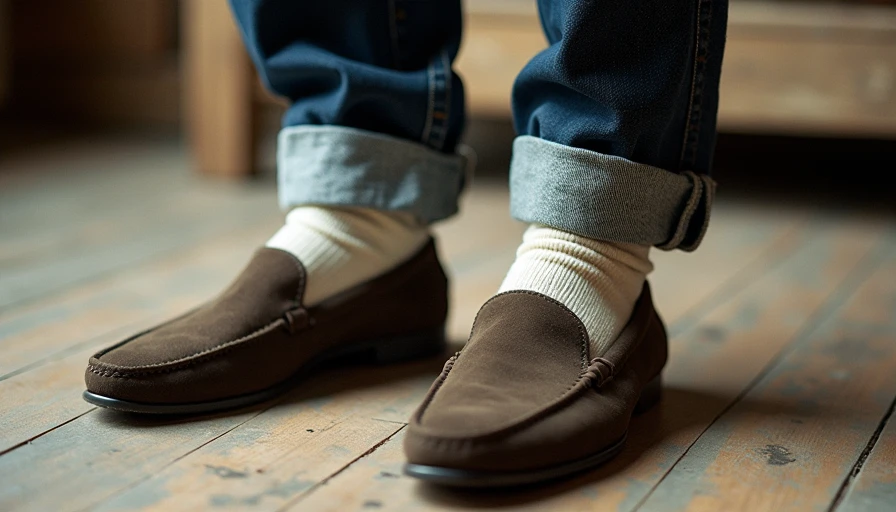
The Finish (Matte over Shine): High-shine patent leather or polished box-calf finishes reflect too much light. They demand perfection. For a soft uniform look, you want matte textures—pebbled leather, textured suede, or a brushed calfskin that develops natural scuffs and creases over time. The scuffs are the details that prove you actually walk through the city instead of just posing for photos.
The Sole (Substance over Slimness): A thin, delicate leather sole looks incredibly formal and offers zero shock absorption for concrete sidewalks. Look for a substantial, flexible rubber or stacked leather sole. It doesn't need to be a hyper-trendy, massive "chunky" platform, but it needs enough weight to balance out an oversized tweed blazer or a heavy cable-knit sweater.
The Toe Shape (Soft Round over Sharp Square): Avoid narrow, elongated almond shapes or sharp geometric squares. A soft, classic almond-round toe box mimics the traditional utilitarian design of mid-century American sportswear, providing a casual, approachable silhouette.
The Friction Formulas: How to Balance the Line
The secret to avoiding the "costume trap" isn't just about the shoe itself; it is entirely about the styling friction you build around it. If you wear loafers with a perfectly ironed oxford shirt, a neat navy blazer, and tailored tan chinos, you have created a literal uniform from 1965. To make it modern, you have to break the rules.
Styling Choice | The Costume Trap (Too Obvious) | The Preppy 3.0 Uniform ( Effortless) | The Style Philosophy |
The Pants | Cropped, slim-fit ankle trousers that show bare skin. | Relaxed, wide-leg wool trousers or loose straight denim. | Letting the fabric pool slightly over the shoe cuts the stiff formality of the leather. |
The Socks | No socks at all, or thin, hidden nylon liner socks. | Thick, slouched cream or white ribbed cotton crew socks. | The athletic texture of the cotton neutralizes the country-club pretense of the loafer. |
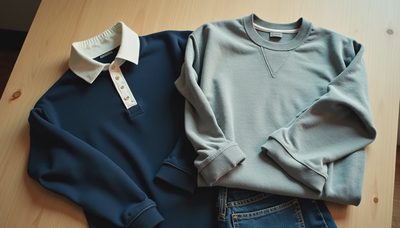
The Top | A tightly tucked, starched button-down shirt with a belt. | An oversized rugby shirt left unbuttoned, or a vintage sports tee. | Merging low-fidelity sportswear with heritage footwear creates a balanced lifestyle look. |

Real Life on Concrete
Last Tuesday, I had a brutal schedule: a three-hour seminar on visual communications followed by a group project meeting that dragged on until sunset at a local coffee shop. I knew I’d be walking at least three miles on hard concrete sidewalks.
I built my entire outfit from the ground up, starting with my most dependable dark espresso-brown leather penny loafers. I pulled on a pair of thick, slouched white cotton crew socks, grabbed my relaxed straight-leg dark denim, and threw an oversized washed navy rugby shirt over a simple cream tank top.
As I was locking my apartment door, Coco decided to do a dramatic slide across the floor, leaving a faint dusting of grey cat fur on my right white sock. Honestly, I didn't even bother to lint-roll it. A pristine outfit is a fragile outfit, and we don't do fragile here.
When I walked into the seminar lab, one of my classmates looked down at my shoes and said, "Ella, those loafers look like they’ve seen a few library basements." I laughed and opened my laptop. That’s exactly how they should look. They shouldn't look like they just came out of a box; they should look like they carry memories, essays, and long walks through Brooklyn. Stop trying to look immaculate. Pick a loafer with some soul, let your socks slouch, and let your footwear tell a real story.


Letters
No letters yet — be the first to write.