
If you spent any time sitting through high school English classes, you probably have a highly specific, permanent image of Daisy Buchanan burned into your brain. She is F. Scott Fitzgerald’s ultimate golden girl—wrapped in pristine, fragile white chiffons, dripping in expensive pearls that someone else paid for, and smelling faintly of money and old-world privilege. In the cultural imagination, Daisy is the absolute blueprint for East Coast elitist dressing. She is the archetype of a world where style exists solely to signal your social standing and prove you’ve never had to do a single day of real, messy work in your life.
But let’s be honest: the traditional, pristine Daisy Buchanan look is incredibly boring in 2026. It’s too fragile. It’s too stiff. It’s completely disconnected from the way real people move through the world.
As a fashion marketing graduate student, I spend a lot of time analyzing how literary characters and historical aesthetics get commercialized and repackaged into internet micro-trends. Most of the time, the internet gets it wrong. It copies the superficial wealth instead of looking at the actual human architecture of the style. If Daisy Buchanan didn’t belong to the rigid social codes of the 1920s Long Island elite—if she were a 20-something living in a brick-walled apartment in Brooklyn today, navigating graduate seminars and buying her own coffee—she wouldn't be wearing starched, fragile luxury. She would have discovered the liberating comfort of Preppy Revival 3.0. She would have kept the poetry, thrown out the elitism, and learned how to slouch. It’s not that deep. But also kind of.
The Metamorphosis: From Fragile Luxury to Soft Structure
To pull Daisy Buchanan out of her historical museum display and drop her onto the streets of modern Brooklyn, we have to completely change our relationship with luxury. Traditional luxury is high-maintenance. It demands dry cleaning, flawless posture, and a life lived inside climate-controlled rooms. But Preppy 3.0 takes those elements of classic quality—the heavy wools, the silk linings, the natural pearls—and treats them with absolute, casual irreverence.
If we rewrite her wardrobe for real life, the rigid structures collapse into soft uniforms. Here is how the visual translation breaks down:
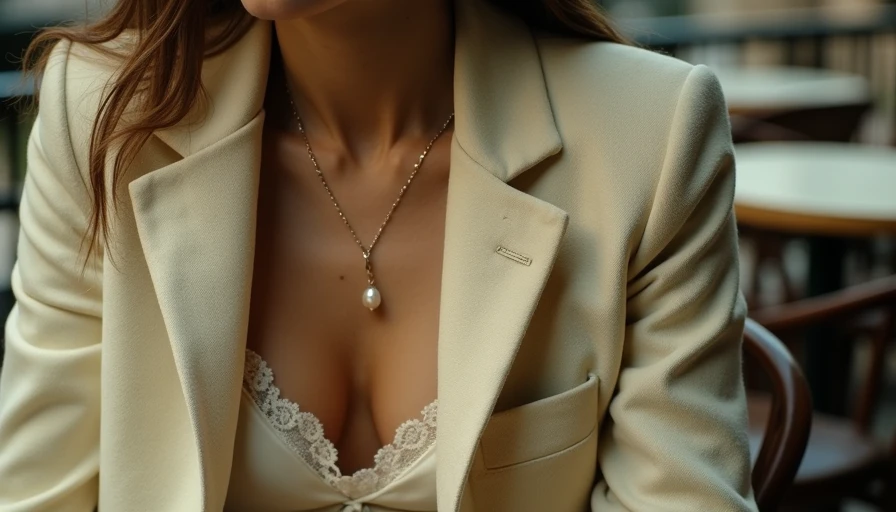
The Outerwear Shift: Instead of a pristine, white fur-trimmed coat that screams "handle with care," modern Daisy wears an oversized, dropped-shoulder tweed blazer in a rich butter-cream or foggy oatmeal tone. The jacket has physical weight and structural integrity, but because it’s cut two sizes too large, it allows her to move her arms, carry a heavy canvas tote bag, and actually breathe.
The Fabric Friction: The biggest mistake people make when trying to look sophisticated is wearing everything tailored. The modern blueprint relies on friction. You take her signature delicate textile—like a vintage silk camisole or a soft cotton lace blouse—and you immediately counter it with something heavy and industrial, like high-waisted, raw-hem straight-leg dark denim.
The Shoe Subversion: Traditional Daisy is trapped in impractical heels. Brooklyn Daisy walks three miles a day on concrete sidewalks. She wears dark espresso-brown leather penny loafers with a substantial, flexible sole, paired with thick, slouched cream cotton socks. The leather is scuffed, lived-in, and comfortable enough to handle a frantic dash for the G train.
The Modern Buchanan Palette Matrix
To make this character transformation feel real instead of like a costume-party gimmick, we have to look at the color landscape. We are stripping away the sharp, high-contrast, wealthy whites and replacing them with our favorite Preppy 3.0 "foggy neutrals."
Literary Archetype | Traditional Daisy Wardrobe (1.0) | Brooklyn Daisy Wardrobe (3.0 Alternative) | The Psychological Tone |
The Outer Layer | Crisp, stark-white starched linen or delicate silk capes. | Oversized Butter-Cream Tweed Blazer | Grounded, intellectual, carries an antique depth that looks better with wear. |
The Base Layer | Tight, fragile chiffon dresses with metallic embroidery. | Washed Slate-Gray Sports Tee or Loose Oxford | Casual, athletic, completely neutralizes any old-money pretension. |
The Footwear | High-shine, pristine silk slippers or narrow leather heels. | Textured Matte Suede or Pebbled Leather Loafers | Durable, utilitarian, designed for walking city blocks instead of manicured lawns. |

Finding Poetry in the Ordinary
The real tragedy of the original Daisy Buchanan is that her style was entirely performative. She dressed to be looked at by other people; she was a visual asset in someone else's mansion. But what I love about Preppy 3.0 is that it is an entirely internal way of getting dressed. We wear these clothes for ourselves. We wear them because a heavy cotton collar or a chunky wool knit feels like a psychological safety net when the outside world feels chaotic and unsteady.
Last Friday, I decided to build an outfit around this exact thought process before heading out to a long creative direction lab. I took a vintage, incredibly soft off-white silk blouse I found in a dusty thrift shop basement last month, tucked it into my favorite straight-leg dark jeans, and threw my heavy, oversized charcoal gray blazer over my shoulders. I added my simple silver chain with the tiny pearl pendant—a small, quiet nod to the classic aesthetic—and stepped into my scuffed loafers.
As I was grabbing my laptop, Coco did a frantic running jump from the back of the sofa, landing directly on my chest and leaving a tiny, distinct smudge of gray cat fur right on the lapel of my blazer.
Old-money Daisy would have had a complete meltdown over an imperfect garment. Perfection is completely overrated. I didn't even reach for a lint roller. I just smoothed down the wool, gave Coco a quick scratch behind the ears, and walked out into the crisp Brooklyn morning air. When you stop treating your clothes like fragile museum pieces and start treating them like a soft, dependable uniform, you finally get to stop performing and just live.


Letters
No letters yet — be the first to write.