
There is a specific type of sensory exhaustion that only exists inside a secondhand clothing store on a Saturday afternoon. It’s the combination of the distinctive, slightly dusty scent of decades-old wool, the rhythmic clack-clack-clack of plastic hangers sliding along metal racks, and the overwhelming amount of visual noise. You are looking at hundreds of items that someone else decided they no longer wanted, trying to find the one piece that feels like it was knitted with your exact life in mind.
Last Saturday, I set out into the crisp Brooklyn morning with a very specific, uncompromising mission: to find the holy grail of Preppy Revival 3.0—the ideal oversized cardigan.
I didn't want something from a fast-fashion website that arrived in a plastic mailer, smelling of synthetic chemicals and destined to look like a pilled, shapeless rag after three trips to the laundromat. I wanted something with history. I wanted a cardigan that felt heavy enough to protect me from the early morning chill on my walk to my graduate seminar, but slouchy enough to make me feel entirely at ease while reading on my living room rug. I visited four different shops across Williamsburg and Greenpoint, flipped through hundreds of sleeves, and out of all of them, only one made the cut. It’s not that deep. But also kind of.
The Checklist: Why Most Cardigans Fail the Preppy 3.0 Test
Before we talk about the winner, we need to talk about why finding a great cardigan is so frustratingly difficult. In my visual merchandising and fashion marketing classes, we talk a lot about "garment architecture"—the structural framework that determines how a piece of clothing drapes, moves, and reacts to the human body. Most contemporary cardigans mass-produced today fail because they are designed for a hanger, not for real life.
To survive my Saturday curation process, a sweater had to clear three incredibly strict hurdles.
1. The Fiber Composition (The Zero-Poly Rule)
The first thing I do when I approach a sweater rack isn’t look at the color or the brand; I reach for the care tag. If the tag reads acrylic, polyester, or nylon as the primary ingredient, I immediately slide it back. Synthetic fibers are the enemy of soft structure. They trap sweat, they create a harsh plastic shine under natural light, and they lack the organic gravity required for a Preppy 3.0 silhouette. Real wool, heavy cotton, or a touch of alpaca possess a natural drape that synthetics simply cannot mimic. They have weight.
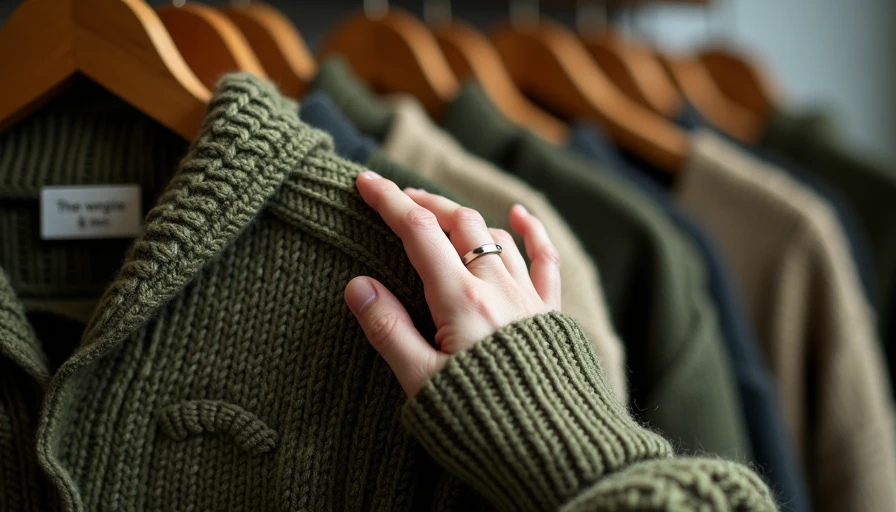
2. The Buttons (The Architectural Details)
A cardigan’s buttons are its focal point. Cheap, lightweight plastic buttons ruin the academic illusion instantly. I was hunting for substantial closures—genuine braided leather buttons, thick tortoiseshell resin, or heavy matte wood. The weight of the buttons determines how the front placket drapes when left unbuttoned. If the buttons are too light, the sweater edges flare outward awkwardly instead of dropping straight down.
3. The Armscye and Shoulder Real Estate
"Armscye" is a technical fashion term for the armhole stitching. Most modern women's sweaters feature a high, narrow armhole designed to make the garment look slim and neat. But for Preppy 3.0, high armholes are a disaster. They prevent you from layering the cardigan comfortably over an oversized oxford shirt or a thick rugby jersey. I was hunting exclusively for a dropped-shoulder silhouette or a deep raglan sleeve that allows the fabric to pool softly around the elbows.
The Journey Across Brooklyn: A Saturday Matrix
To give you an idea of the landscape, here is how my Saturday afternoon broke down across the different vintage outposts. Finding the perfect piece is a game of patience and metrics.
Stop | Location Style | Cardigan Density | The Common Defect | Result |
Shop 1 | Curated Trendy Vintage | High | Beautiful colors, but 100% thin acrylic from the 1990s; felt like plastic. | Pass |
Shop 2 | High-End Designer Archive | Low | Gorgeous authentic British wool, but tailored too tightly; zero slouch. | Pass |
Shop 3 | Dusty Overstock Basement | Massive | Smelled intensely of old attics; mostly corporate-logo golf cardigans. | Pass |
Shop 4 | Independent Secondhand Men's | Medium | The Sweet Spot. Heavy textures, dropped shoulders, genuine wool. | The Winner Found |
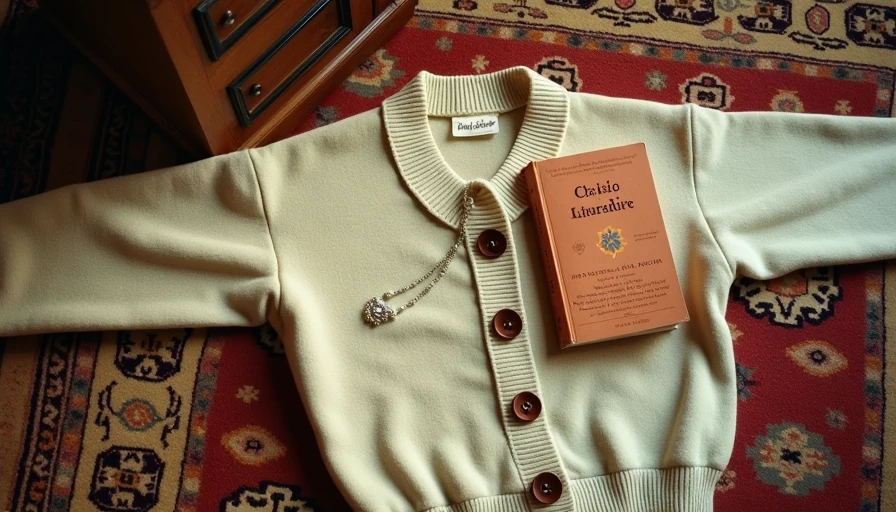
It wasn't until I walked into a quiet, slightly hidden secondhand shop that primarily specialized in classic men's workwear that I found it. Tucked between two heavy denim chore coats was a chunky, rib-knitted cardigan in a rich, foggy oatmeal tone.
The tag was old, faded, and stitched with a vintage cursive label: 100% Pure British Wool. Made in Ireland. I pulled it off the rack, and my hands instantly registered the weight. It felt like holding a shield. The shoulders were dropped by design, the armholes were wide and generous, and down the front ran five heavy, beautifully tarnished espresso-colored braided leather buttons. It was exactly two sizes too large for me, which meant it was absolutely perfect.
How I’m Wearing It This Week (The Anti-Costume Formula)
The danger of an authentic vintage Irish wool cardigan is that if you style it incorrectly, you can easily look like you’re trying to audition for a historical drama about poetry students in the 1930s. To keep it anchored in 2026, you have to inject modern, casual friction.
Yesterday, I wore it to my afternoon digital marketing seminar. I left the heavy wool unbuttoned, letting it drape over a casual, slightly faded navy sports tee. I paired it with high-waisted, straight-leg dark-wash denim that hit right at the ankle, allowing a pair of thick, slouched cream cotton socks to show above my scuffed dark brown loafers.
The contrast was magic. The heavy, historical weight of the Irish wool balanced the casual, athletic nature of the sports tee, while the structured denim kept the oversized silhouette from looking messy or careless. When I walked into the lecture hall, my professor looked up and said, "Ella, that knit looks like it has a syllabus of its own." I took it as the ultimate compliment.
When I got back to my apartment, I dropped my heavy canvas tote by the door and sat cross-legged on my rug to finish some readings. Coco immediately climbed onto my lap, kneaded her paws into the thick oatmeal wool for five minutes, and fell fast asleep. If a garment can survive a meticulous thrifting inspection, a three-mile walking commute through Brooklyn, a high-density graduate presentation, and an executive nap-test by a grey tabby cat, it officially earns its place in the soft uniform rotation.
Stop buying fast-fashion knits that lose their soul after one season. Go find a clothing rack that requires you to dig, look for the heavy wool, check the buttons, and let yourself borrow a piece of history.


Letters
No letters yet — be the first to write.