
If you have spent any time in a university literature department, or if your algorithm has ever drifted into the mood-board heavy corners of the internet, you have undoubtedly encountered Donna Tartt’s The Secret History. Published in 1992, the novel has become a permanent textbook for a very specific type of subculture known online as "Dark Academia." On any given day on Pinterest, you will find thousands of images dedicated to this aesthetic: gloomy, rain-soaked Gothic architecture, towers of dusty ancient Greek textbooks, and teenagers posing in heavy tweed overcoats, starched black turtlenecks, and dramatic wool capes that look like they were borrowed from a movie wardrobe department.
It is visual poetry, sure. But as someone wrapped up in a graduate degree in visual culture and fashion marketing, I have a massive confession to make: most of these online styling interpretations completely miss the point. When you actually read the text—when you analyze the physical descriptions Tartt uses to introduce Henry, Francis, Bunny, Camilla, and Charles—you realize that their style wasn't a theatrical gothic costume. They weren't trying to look spooky or archaic. They were wearing traditional East Coast collegiate clothes with a very specific type of calculated, wealthy carelessness. They didn't wear immaculate, heavy costumes; they wore high-quality garments that they treated with absolute, everyday irreverence. Let's talk about The Secret History Problem and how to strip the theater away so we can wear the actual soul of the book in real life. It’s not that deep. But also kind of.
Deconstructing the Text: Wealth as an Unmade Bed
The primary mistake of contemporary internet styling is the obsession with absolute precision. People think that to look "academic," every pleat must be ironed, every collar must be stiff, and every coat must look pristine. But Tartt’s characters operated on the exact opposite sartorial frequency. Their style was brilliant because it was fundamentally flawed, slightly decayed, and thoroughly lived-in.
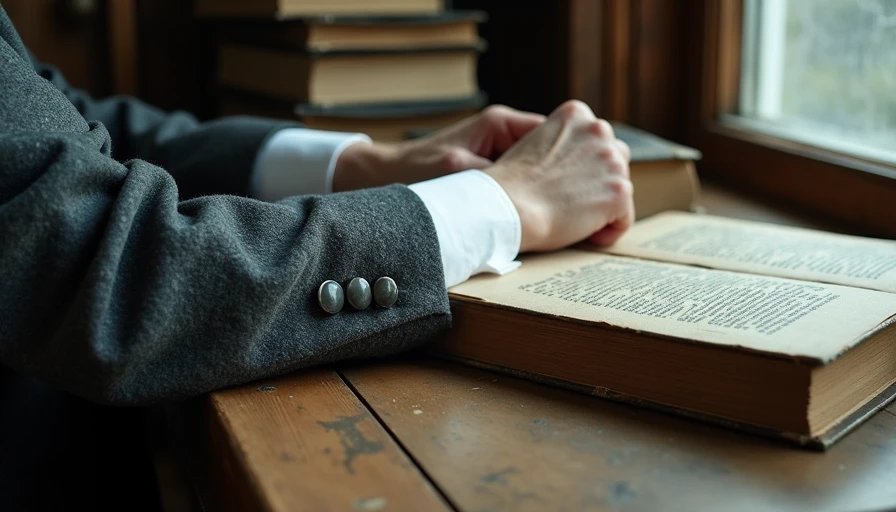
Let's look at the actual descriptions of the characters to understand the true engineering of their silhouettes:
Francis Abernathy’s Slouch: Richard Papen describes Francis as wearing beautiful, expensive English tailoring—but always with a dramatic twist of negligence. His cuffs are unbuttoned and flapping loose, his silk ties are tied askew, and his heavy wool coats are often wrinkled from being tossed onto library floors. The luxury was real, but the respect for the luxury was zero.
Henry Winter’s Heavy Basics: Henry’s wardrobe relied entirely on structural weight. He wore heavy dark suits, thick white starched shirts that were often slightly stained with ink, and a black umbrella that he carried like a weapon. His look was intimidating not because it was trendy, but because it possessed physical gravity.
Bunny Corcoran’s Sloppy Prep: Bunny was the epitome of the broken-down country club look. He wore monogrammed sweaters with loose threads, scuffed white buck shoes that had turned a dull gray, and jackets borrowed from friends that were slightly too small or too large. His clothes carried a sense of generational decay.
The Sartorial Translation Matrix
To fix the "Secret History Problem" in your own wardrobe, you have to stop shopping in the costume section and start shopping for durable, heavy-weight basics that look better when they are a little rumpled. We are replacing the theatrical gothic elements with functional, tactile academic layers.
The Internet Costume (Where It Goes Wrong) | The True Literary Reality (How to Fix It) | The Visual Communication Shift |
Stiff, synthetic black trench coats or dramatic long velvet capes. | Oversized, heavy men's wool blazer in charcoal or dark tweed. | Provides physical architecture and structural weight without looking like a costume. |
Pristine, tight black polyester turtlenecks that look clinical. | Crisp, untucked white cotton oxford shirt with an unbuttoned, relaxed collar. | Introduces a layer of bright, human contrast that frames the face with organic lines. |
High-shine, brand-new formal dress shoes that give you blisters. | Scuffed espresso-brown leather loafers or well-worn utilitarian leather boots. | Proves the clothes are a functional uniform for walking city blocks and library aisles. |
Living the Text on a Rainy Tuesday
Last Tuesday, the weather in Brooklyn was miserable—a cold, steady autumn drizzle that felt exactly like a chapter set in Vermont. I had a three-hour seminar on visual communications followed by a long editing session in the digital marketing lab. I knew I’d be walking through wet streets and sitting in drafty campus rooms all day.
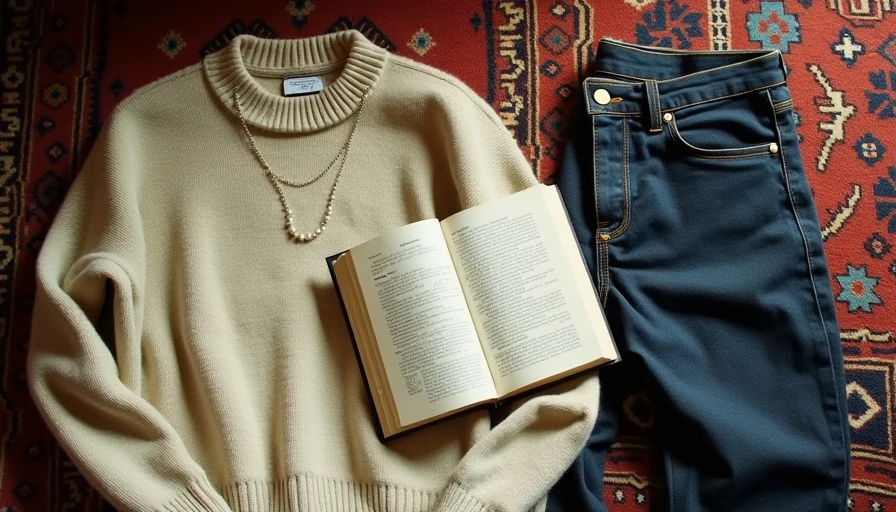
Instead of putting on a theatrical costume, I built an outfit that channeled the true, heavy weight of Tartt’s text. I pulled on my crispest white cotton men’s oxford shirt, left the top two buttons completely open, and left the hem entirely untucked. Over it, I threw my heaviest oversized charcoal gray wool blazer—the one with the dropped shoulder seams and deep, functional pockets. I paired it with high-waisted, straight-leg dark-wash denim and my favorite scuffed espresso-brown leather penny loafers worn with thick, slouched cream cotton socks.
Before I walked out the door, I grabbed my black leather portfolio. Coco was curled up on the sofa, and as I bent down to say goodbye, she did a lazy stretch, leaving a faint dusting of grey tabby fur along the lapel of my jacket.
Perfection is an absolute trap. If Henry Winter could walk around Hampden College with ink stains on his cuffs and wrinkles in his trousers, I could certainly walk into a graduate seminar with a few strands of cat hair on my wool blazer. It added to the lived-in, unmade-bed quality that makes academic styling feel real instead of performed.
When I ran into my creative direction advisor near the campus cafe, she looked at my outfit, nodded at the heavy charcoal wool and the open white collar, and said, "Ella, you look like you’re about to either translate an ancient Greek text or present a highly aggressive marketing deck." I took a sip of my black coffee and smirked. "That's exactly the mood."
Stop trying to look immaculate for the internet camera. Ditch the synthetic capes, buy clothes with physical weight and genuine history, let your collars fray, and build a uniform that lets you actually live inside the books you love.



Letters
No letters yet — be the first to write.