
During my digital consumer data seminar last week, our professor challenged us to analyze a very specific metrics anomaly: why do multi-million-dollar, heavily retouched campaign images from heritage clothing labels routinely underperform on social media, while raw, low-fidelity snapshots of everyday outfits organically drive massive saved-post numbers and algorithmic reach?
As someone whose daily routine is split between building brand strategy decks for class and navigating the real-world visual landscape of social apps, staring at those corporate lookbooks made the answer glaringly obvious.
The internet is currently obsessed with academic visual codes. You cannot scroll through a feed without encountering the slouchy, texturally rich language of classic layering. It should be a effortless victory for legacy brands that have owned this heritage for a century. Yet, their official digital channels remain trapped in a 2012 retail mindset. They continue to broadcast a pristine, static fantasy of exclusive country-club leisure, completely blind to the fact that the modern digital audience operates on an entirely different aesthetic frequency. They are selling a status symbol; the internet is looking for a sensory reality.

The Strategic Failure of Absolute Perfection
The core defect in traditional fashion marketing is the corporate equation of "luxury" with "lack of friction."
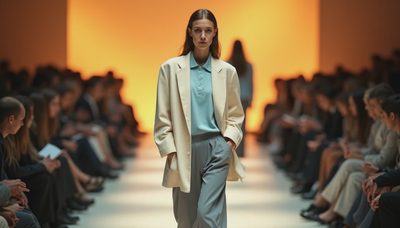
If you analyze the official feeds of mainstream heritage labels, the content feels clinical. The models have airbrushed skin, they wear starched shirts without a single organic wrinkle, and their ties are angled with mathematical precision. They stand on manicured estate lawns, smiling into high-resolution studio lenses.
In a modern social feed, that level of curation acts as an immediate cognitive stop-sign. It signals an advertisement, and the human brain is trained to scroll past it instantly.
The digital space doesn't respond to perfection; it responds to texture, movement, and the illusion of the unprompted moment. The most successful visual creators aren't staging pristine scenes; they are capturing what I call "the architectural accident."
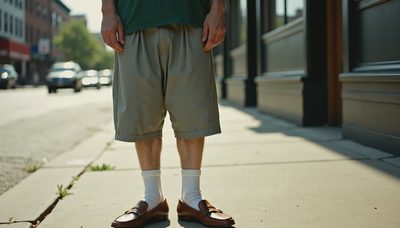
The Cropped Mystery (Anti-Catalog Composition): Traditional commercial photography demands a full-length, centered shot of the product to maximize retail clarity. But digital engagement thrives on the opposite logic—the intentional crop. A low-angle, off-center film snap that captures an outfit only from the waist down as someone crosses a concrete street does far more narrative work. You see the fluid weight of charcoal wool trousers stacking slightly over a pair of scuffed, matte leather loafers, leaving room for a slouched cotton sock to pool at the ankle. By hiding the face and the full environment, the image stops being a catalog advertisement and becomes a lifestyle fragment the viewer can mentally inhabit.
The High-Velocity Blur (Decoupling the Pose): Crisp, studio-lit static images feel dead because they lack time and space. A flash-heavy photograph taken at dusk on a city corner, carrying a slight motion blur because the subject is actively walking, communicates authenticity. The blur introduces friction. It proves the clothes are doing what they were engineered to do: moving through a real day, responding to real weather, and functioning as a personal uniform rather than a retail asset.
Semiotics of the Screen: Texture Over Status
From a consumer behavior standpoint, this wardrobe methodology works on social media because it translates tactile data through a glass screen. Synthetic, fast-fashion textiles reflect light in a harsh, flat sheen that looks weightless and artificial under a lens, no matter how much digital alteration is applied.
But heavy, natural materials possess inherent visual gravity. The intricate, irregular cables of a pure wool fisherman sweater, the deep shadows inside a heavy herringbone weave, and the natural matte creasing of a broken-in cotton collar carry an immediate sensory depth. When these textures are layered together—say, a sporty cotton jersey peeking out from beneath a structured tweed jacket—the lens captures the contrast in thickness and shade. Even on a flat smartphone display, the viewer's brain automatically generate a feeling of physical comfort, durability, and warmth.

A Private Visual Experiment
While putting together a presentation for my visual communications workshop, I decided to run an informal asset test.
I took the vintage oatmeal-colored Irish wool cardigan I thrifted last weekend and laid it flat across my unmade bed. I surrounded it with my actual, messy environment: a stack of open research paperbacks covered in highlighter notes, my vintage rangefinder camera with its strap tangled, and a half-empty mug of coffee. I let Coco walk directly into the frame, catching the exact split-second she sniffed at the brown braided leather buttons under the natural, overcast daylight filtering through my window.
The resulting photograph wasn't clean. There were a few strands of grey cat hair visible on the sleeve, the coffee mug showed a light stain on the porcelain rim, and the lighting carried the moody, slightly dim undertone of a rainy Brooklyn afternoon.
I uploaded that image into our graduate critique group chat alongside a flawless, studio-lit lookbook image from a luxury label showing a model wearing a similar academic knit. I asked my peers—a group of hyper-critical marketing minds trained to spot corporate manipulation—which image made them more likely to seek out that specific garment.
The consensus was instantaneous. They bypassed the polished brand asset entirely and chose the unmade-bed snapshot.
The corporate asset was performing an elite lifestyle, telling the consumer: “This is an immaculate luxury product; you must maintain perfect order to wear it.” My low-fidelity image, despite the mess and the cat hair, was communicating utility and comfort. It said: “This garment is durable, it has weight, and it just spent four hours helping someone survive a digital strategy deadline.”
Stop treating your daily wardrobe like a marketing presentation that needs to score a flawless grade. Turn away from the sterile, corporate perfection of high-shine lookbooks and embrace the clothes that have physical weight, real wrinkles, and natural movement. Open your collar, let your camera catch the genuine texture of your life, and let your clothes tell a story that belongs to the real world.

Letters
No letters yet — be the first to write.