There is a highly specific visual myth perpetuated by the modern fashion industry regarding what a creative professional looks like when they are working from home. If you flip through the seasonal digital campaigns of high-end lifestyle brands, the domestic workspace is always presented as an immaculate, sterile gallery. The model sits at a pristine, unblemished marble desk, wearing a tailored silk blouse or a cashmere set that looks as though it has never encountered a speck of dust, let alone a real-life domestic distraction. There are no stray cords, no half-empty coffee mugs staining the wood, and certainly no pets disrupting the clean, airbrushed lines of the silhouette.
But for those of us balancing the frantic realities of graduate research, visual communication labs, and digital marketing strategy deadlines, that image is a complete fiction.
In my visual culture and brand marketing seminars, we talk extensively about the concept of spatial clothing—the idea that the garments we wear within our private environments dictate our cognitive focus and emotional stability just as much as our public uniforms do. When you are spending a rainy Sunday buried under a mountain of consumer data reports, design textbooks, and creative briefs, your clothes cannot be fragile performances of luxury. They need to be durable, structurally substantial, and deeply comfortable.
An extraordinary, thrifted heavy-weight fisherman knit sweater that has officially earned the rigorous seal of approval from Coco, my cat. This isn't just a casual outfit diary; it is an analytical study of how physical garment architecture, material science, and textural friction combine to create an effortless, repeatable domestic armor that bridges the gap between private comfort and professional readiness.
It’s not that deep. But also kind of.
The Material Engineering of the 3-Pound Sweater
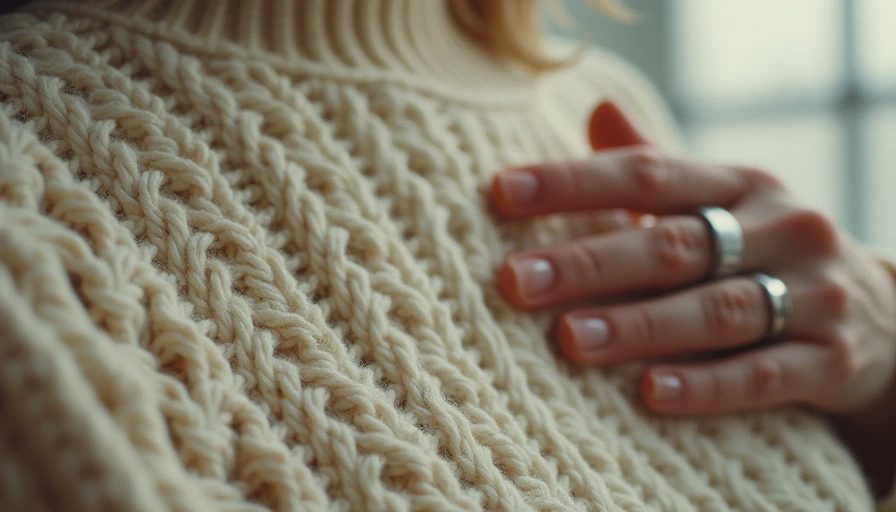
Before we can discuss how to style a domestic academic uniform, we must first analyze the physical engineering of the garment itself. The sweater in question is a vintage, 100% unbleached British wool crewneck fisherman knit that I found in the back corner of a dusty secondhand shop in Greenpoint three weeks ago. It does not carry a designer label; it carries a faded, heavy woven tag that reads Hand-Knitted in the Outer Hebrides.
When you pick up this garment, your hands instantly register its weight: it weighs nearly three full pounds. In contemporary retail, mass-production brands have systematically conditioned consumers to believe that thin, lightweight knits are a luxury. They use synthetic blends—acrylic, nylon, and polyester—to create cheap, featherweight sweaters that lose their shape after two washes and trap body heat, causing physical discomfort during long periods of focus.
True Preppy 3.0 garment architecture relies on the opposite philosophy: Material Gravity.
1. The Physics of High-Density Cable Stitches
The three-dimensional texture of a traditional fisherman sweater isn’t just decorative; it is a historical piece of utilitarian engineering. The diamond, honeycomb, and cable patterns were originally designed to add literal thickness and density to the knit, creating tiny pockets of still air within the wool matrix.
In a modern home-office environment, this high-density architecture acts as a natural thermoregulator. When you are sitting still for six hours straight analyzing digital marketing data, your core body temperature naturally drops. Synthetic fibers cause your temperature to spike and crash, leading to constant micro-adjustments—putting a blanket on, taking it off, adjusting the thermostat. Heavy, unbleached natural wool breathes with your body, maintaining a completely stable micro-climate against your skin so your brain can remain focused on the text.
2. The Ergonomics of the Dropped Raglan Sleeve
Most contemporary women’s knitwear features a set-in sleeve with a high, narrow armhole designed to look neat and slim on a retail hanger. However, if you attempt to spend an entire day typing on a laptop or sketching visual layouts while wearing a high armhole, the fabric constantly pinches the front of your shoulder and pulls tightly across your upper back.
The vintage garment I selected features a deep, generous raglan construction where the sleeve extends in one continuous piece all the way to the collar. This structural choice completely removes the stiff seam from the shoulder pivot point. The fabric pools softly around the upper arms and elbows, allowing for total freedom of motion whether you are reaching for a heavy textbook on a high shelf or lounging cross-legged on a rug.
The Tactile Psychology of the Workspace Matrix
When designing a repeatable uniform for home focus, the color palette and the fabric textures must be selected with absolute intention. If your clothes are too restrictive, you experience physical fatigue; if they are too sloppy—like an old pair of thin, fleece sweatpants—your brain enters a state of cognitive relaxation that kills academic productivity.
To solve this, I built last Sunday’s uniform on a foundation of texturally rich, low-contrast tones that interact seamlessly with the environment of my apartment.
       [Tactile Psychology Matrix]

  Garment Element        Cognitive/Physical Function
──────────────────      ─────────────────────────────
Cream Fisherman Knit ──► Heavy Physical Shield / Warmth
Charcoal Wool Pants  ──► Fluid Tailoring / Movement
Raw Indigo Denim     ──► Utilitarian Friction / Structure
Scuffed Penny Loafer ──► Architectural Anchor / Focus
The combination of the cream fisherman knit and the fluid charcoal wool trousers creates an optimal state of High-Low Tactile Friction. The trousers provide a clean, elegant silhouette that feels like real tailoring, preventing the oversized sweater from looking careless or lazy. Yet, because both fabrics are soft and natural, they allow the body to settle into any working posture without restriction.

The Seven Pillars of the Sunday Uniform
To make this domestic look completely repeatable throughout the autumn season without experiencing style fatigue, I have established a strict structural blueprint for how these pieces must be assembled and broken down.
Uniform Component | Material Composition | Structural Design Principle | Real-Life Function |
The Outer Layer | 100% Pure Unbleached Hebridean Wool. | Oversized silhouette, dropped raglan sleeves, dense honeycomb cables. | Acts as a physical shield against cold drafts; holds its architectural shape over hours of sitting. |
The Base Layer | Faded, broken-in light-blue cotton men's oxford shirt. | Oversized fit, unbuttoned stiff collar, frayed cuffs. | Adds a layer of crisp, breathable contrast that keeps the wool from directly touching the neck. |
The Bottoms | Fluid, wide-leg charcoal gray tropical wool or relaxed raw denim. | High-waisted construction, loose drape through the thigh, pooling hem. | Allows for complete freedom of leg movement; maintains a scholarly, tailored line from the waist down. |
The Footwear | Scuffed, matte dark espresso-brown pebbled leather penny loafers. | Heavy stacked leather sole, soft rounded toe box, no synthetic polish. | Serves as an architectural anchor for the feet, mentally separating work hours from sleep hours. |
The Sock Buffer | Thick, slouched cream-colored ribbed cotton crew socks. | Dense athletic knit, loose elastic band that pools at the ankle. | Absorbs the weight of the loafer; fills the visual gap between the trouser hem and the shoe. |
The Hardware | Simple silver chain with a small, raw irregular pearl pendant. | Thin delicate line, low-luster finish, resting on the collarbone. | Introduces one tiny, sharp point of refined visual contrast against the coarse texture of the wool. |
The Domestic Co-Sign | One grey tabby cat (Coco). | Dense, low-friction fur layer, high-density purr mechanism. | Acts as the ultimate qualitative test for garment softness, warmth, and structural comfort. |
The Co-Sign: Passing the Executive Cat Test
Now, let's address the element that gives this specific outfit its title: The Coco Factor.
Anyone who lives with a cat knows that they are the absolute ultimate judges of textile quality. They do not care about fashion marketing trends, they do not read digital lookbooks, and they are completely immune to the prestige of designer branding. They respond purely to the primal, tactile data of raw materials. If a sweater contains a high percentage of scratchy, chemical-heavy synthetic fibers, a cat will sniff it once and walk away. If a garment is too thin, it doesn't trap enough body heat to interest them.
Last Sunday afternoon, the rain was coming down in a steady, gray sheet against my apartment windows, completely blurring out the Brooklyn skyline. I had been sitting on my Persian rug for nearly three hours, completely engrossed in drafting a 3,000-word digital strategy report for my creative direction seminar. I was wearing the unbleached cream fisherman knit, my loose gray trousers, and my worn leather loafers.
Coco, who had spent the morning sleeping on top of my radiator, walked slowly into the center of the room, surveyed the mess of textbooks scattered around my laptop, and made a direct, calculated leap into my lap.
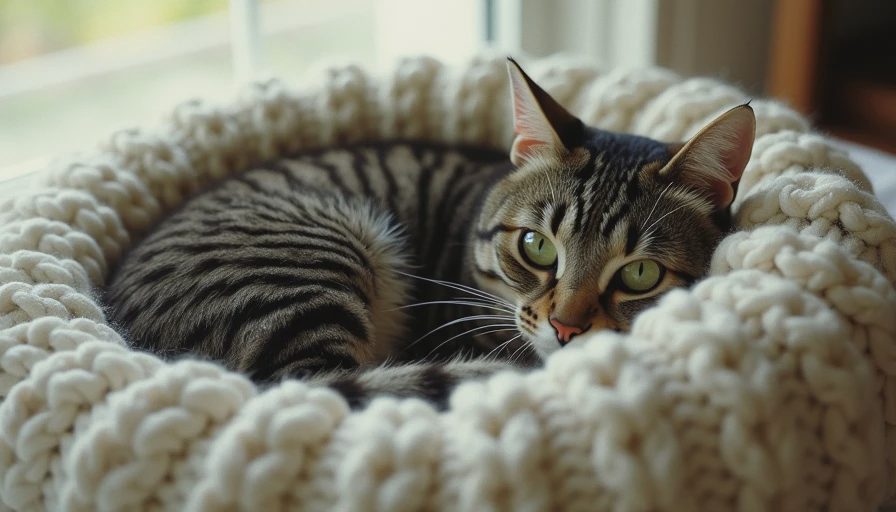
She didn't just curl up and fall asleep immediately. First, she spent five full minutes performing what I call the executive material inspection: kneading her front paws deeply into the thick, dense honeycomb stitches of the Hebridean wool, purring loudly against the collar. The three-pound weight of the sweater perfectly absorbed the pressure of her paws, and the natural lanolin oils in the unbleached wool created a soft, organic warmth that acted like an immediate sedative for both of us.
For the next two hours, neither of us moved. I typed out my marketing strategy data with Coco acting as a heavy, vibrating anchor across my lap, her grey fur blending beautifully with the unbleached cream tones of the wool fibers.
The Reality of a Functional Uniform
When I finally finished my strategy deck and stood up to stretch as the sun began to set, I looked at myself in the hallway mirror. My oversized cream knit was covered in a heavy, highly visible layer of grey tabby cat fur along the entire front torso. The collar of my light-blue oxford shirt was rumpled and crooked, the hem of my gray wool trousers had gathered a light dusting of fibers from the rug, and the leather of my loafers showed deep, organic creasing where my feet had been tucked under my body.
If I were trying to maintain the fragile, artificial performance of an online fashion trend, this would be the moment I reached for a lint roller in a state of mild panic.
But, perfection is an absolute trap designed by people who don't actually do creative work. In the real world of Preppy Revival 3.0, those imperfections are the details that give an outfit its actual soul. The cat hair proves that the garment is soft enough to nurture a quiet domestic life; the creased leather proves the shoes are broken-in tools built for movement; the rumpled cotton collar proves the shirt spent the afternoon helping someone research and write.
When you transition away from treating your clothes like a delicate retail asset and start treating them as a soft, dependable armor, your relationship with dressing completely changes. You stop performing for a camera and start living inside your skin. This rainy-Sunday uniform works because it requires zero maintenance, offers absolute physical freedom, and carries enough structural gravity to keep your mind sharp and focused.
So, find a knit that has real weight, pair it with loose, tailored lines, let the cat hair stick to the wool, and build a uniform that lets you create on your own terms.